Our Journey on Animal-Human Interactions
- Posted
- 14 Sept 2026
- Event
- 1 Jul 2026
- Children
- 190
- Parents
- 0
- Community hours
- 2
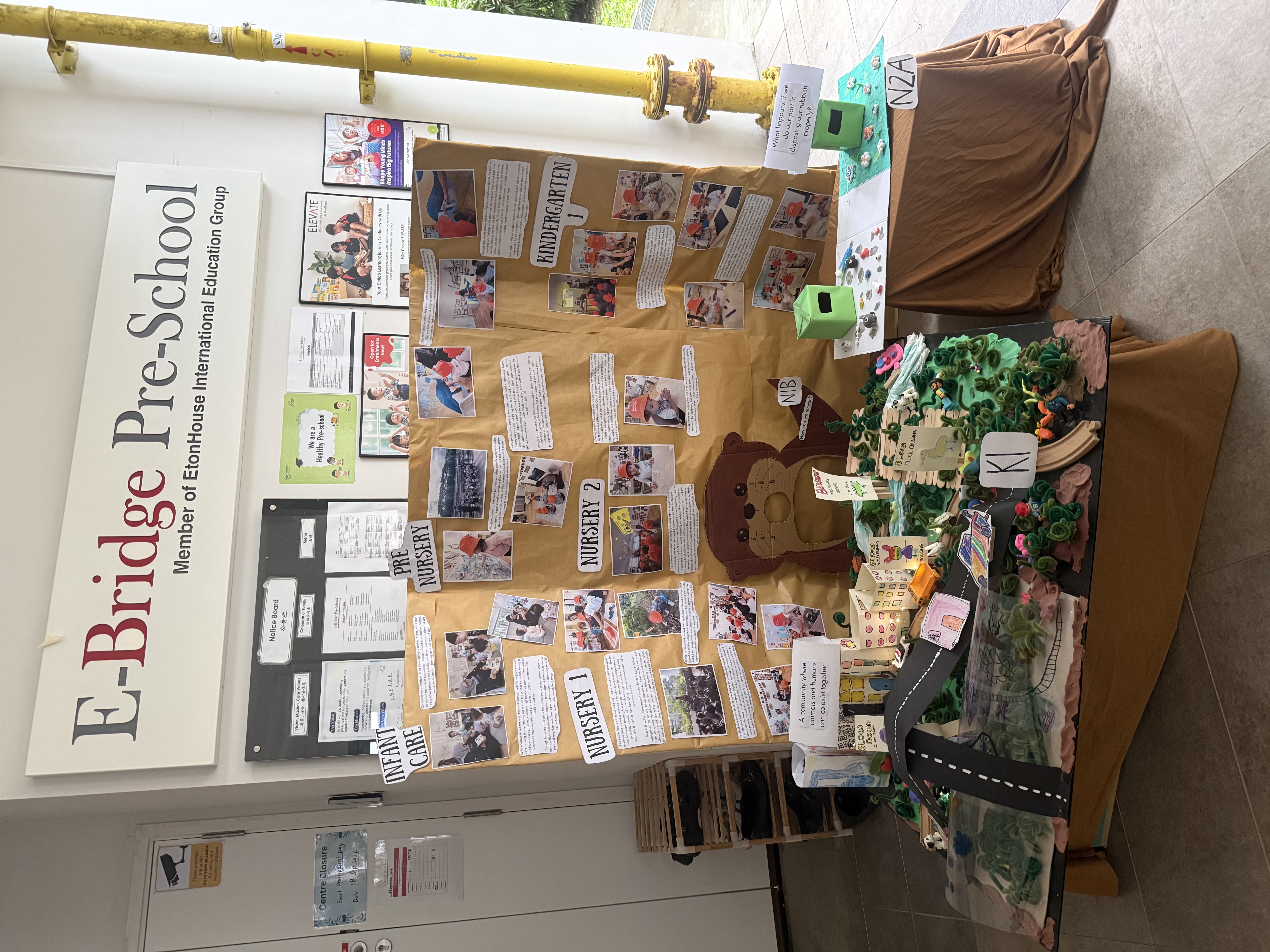
Our infants were introduced to the idea of caring for animals at home, with a focus on familiar pets such as dogs and cats. Through a shared picture-book experience, the children discovered that pets rely on us for food and water, a clean and safe space, gentle handling, grooming, and lots of love and care.
As the educator shared the story, the infants engaged with the images in their own ways—looking closely, reaching out to touch and point at the animals, listening to the educator’s voice, and responding through sounds and gestures. These small but meaningful responses reflected their curiosity and growing awareness of the animals around them.
Through this gentle introduction, the children began to experience an important message about animal–human interactions: animals depend on humans to care for them and keep them safe. These early encounters nurture a developing sense of care, gentleness and empathy towards living things.
Our PNA children explored how our actions can affect animals living in the water. Their learning began through observations of the nearby canal and conversations about the rubbish they noticed, leading to emerging ideas about what animals need to live in a clean and safe environment.
To deepen this understanding, the children were invited to create a sea habitat, colouring sea creatures and adding them to a shared ocean backdrop. They then encountered a tub of “water” containing bottle caps, plastic straws and other discarded materials. Imagining the sea animals living amongst the rubbish, the children were invited to consider, “Does this belong in the ocean?” and “How can we help the animals?”
Through hands-on action, the children removed the rubbish from the water, making visible their growing understanding that our choices and actions can make a difference. This experience encouraged them to see themselves as active participants in caring for animals and protecting the environments they call home.
Our PNB children embarked on an ocean adventure inspired by the beloved song Slippery Fish by Amy Liz. Singing together sparked their curiosity about sea creatures and led to meaningful conversations about caring for our oceans.
Using a large whale picture, sea animal figures, and different objects, the children explored what belongs in the ocean and what does not. They sorted food and rubbish, learning that fish and other sea creatures need healthy food to survive, while trash can harm ocean life. Through this hands-on experience, the children discovered that rubbish belongs in the bin—not in the ocean—and that everyone can play a part in keeping our seas clean.
Read books or sing songs about sea animals with your child, and talk about simple ways to care for the environment. Encourage them to sort rubbish correctly and remind them that every small action helps protect our oceans and the animals that call them home.
Our inquiry began with a visit to the nearby canal, where the N1A children excitedly observed fishes and turtles swimming in the water. During a return visit a few days later, they noticed something had changed. The water looked different, there was an unpleasant smell, and they could no longer see any fishes. This led to meaningful discussions about how rubbish can affect our environment and the animals that live in it.
Back in class, the children explored this idea further through a hands-on investigation. They compared a clean river with a polluted river filled with rubbish and murky water. The children imagined themselves as fishes and reflected on where they would prefer to live. They then worked together to remove the rubbish, discovering how caring for our waterways helps create a safe habitat for animals.
During our nature walk, we read the story This Doesn't Belong in Nature, which inspired the children to take action. Wearing gloves, they carefully picked up litter that did not belong in nature and disposed of it in the rubbish bin. Through this experience, the children learnt that everyone can play a part in caring for the environment.
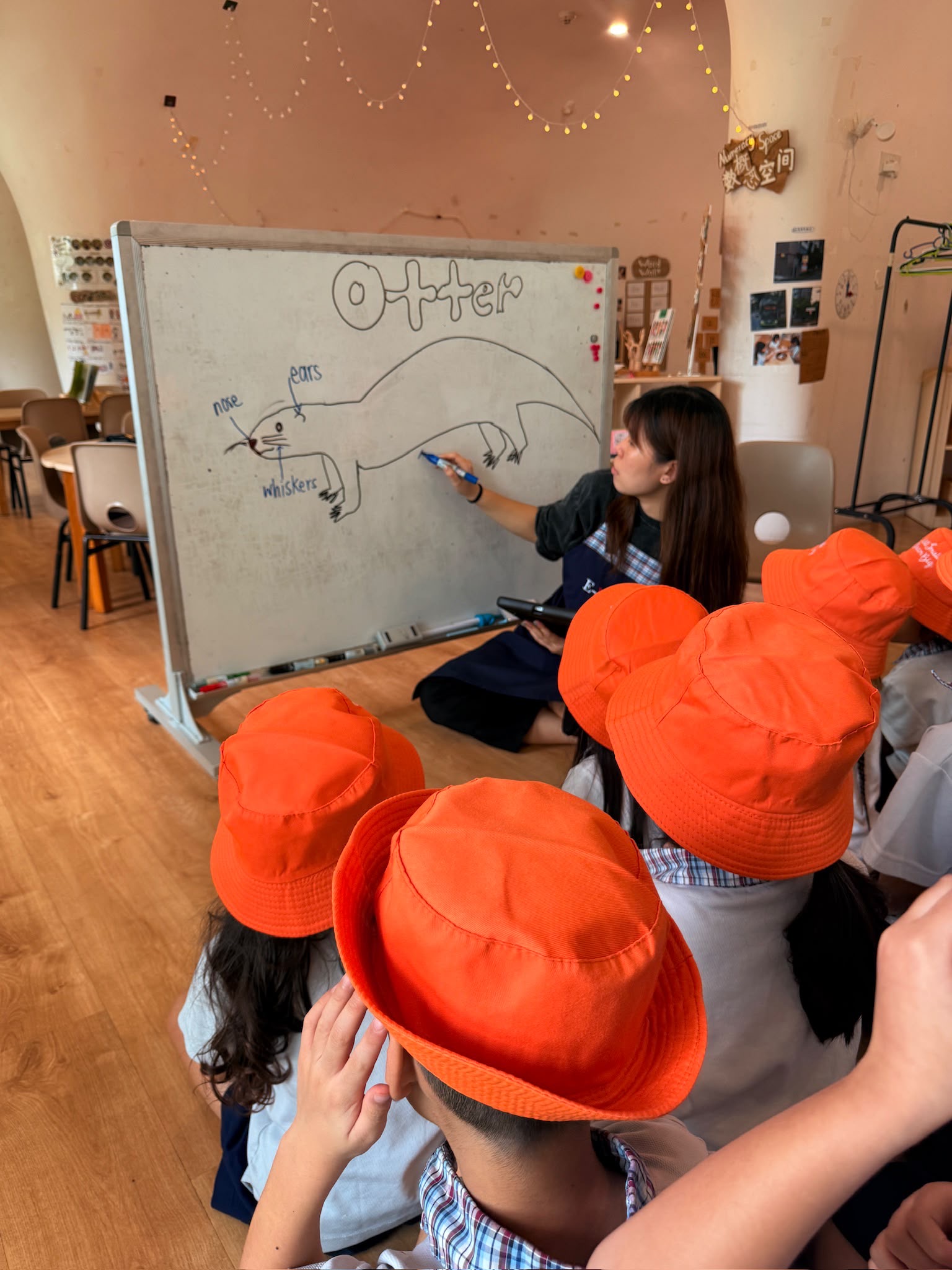
Our N1B children were introduced to news articles about otters and learned how littering can affect their habitats and well-being. Together, they explored real photographs of otters from the news and discussed how rubbish left in rivers and waterways can harm animals. Through this discussion, the children began to understand that the litter people throw away does not simply disappear but can end up where otters live, making their environment unsafe.
The children were then introduced to the otter model (shown in the picture). As they looked inside the otter’s stomach, they discovered many recyclable materials, such as plastic bottles, cans, and paper, that were not meant to be eaten. This prompted conversations about why these items do not belong in an otter’s stomach and how littering can accidentally cause animals to eat harmful waste. The children were invited to become “Otter Helpers” by carefully removing the recyclable items from the otter’s stomach and sorting them into the correct recycling bins. Through this hands-on experience, they developed an understanding of the importance of recycling and taking responsibility for keeping the environment clean to protect wildlife.
Our N2A children participated in an engaging learning experience about living harmoniously with nature. We invited a resource person from the National Environment Agency (NEA) to share about Singapore's vision of becoming a City in Nature and how we can coexist respectfully with wildlife. Through interactive discussions, the children learnt that wild animals such as monkeys, birds, and otters are an important part of our environment. They explored appropriate ways to interact with wildlife, including observing animals from a safe distance, not feeding them, keeping the environment clean, and disposing of litter responsibly to protect both animals and their habitats.
Following the talk, the children reflected on what they had learnt by using air-dry clay to create two different models. One model represented a clean environment where people disposed of their rubbish responsibly, allowing both humans and wildlife to live safely together. The other model showed the consequences of littering, illustrating how rubbish can harm animals and pollute their habitats. As they created their models, the children shared their ideas about the importance of caring for the environment and how their everyday actions can make a positive difference.
This experience encouraged the children to become responsible members of the community by recognising that even simple actions, such as cleaning up after themselves, contribute towards creating a cleaner, safer, and more sustainable City in Nature for everyone.
Our K1 children participated in an engaging sharing session conducted by NParks, where they learned about the different animals that may appear in our neighbourhoods and on roads, such as otters, monkeys, hornbills, and monitor lizards. Through photographs, videos, and discussions, they explored why these animals sometimes enter human environments and the challenges they may face, including traffic, habitat loss, and human activities. The children were encouraged to think about how people and wildlife can live safely together and discussed simple ways to show care and respect for the animals they encounter.
Following the sharing session, the children reflected on what they had learned and discussed how they could help protect animals in their communities. They shared a variety of thoughtful ideas, including building wildlife tunnels and bridges to help animals cross roads safely, creating trucks to transport lost animals back to their natural habitats, and reminding people to drive carefully and avoid disturbing wildlife. Through these meaningful conversations, the children demonstrated empathy, problem-solving, and a growing understanding that everyone has a role in caring for animals and protecting the environments we share with them.