K2s SSDB Journey with Mandai Wildlife Group : Otters
- Posted
- 15 Sept 2026
- Event
- 14 Sept 2026
- Children
- 44
- Parents
- 0
- Community hours
- 5
The children demonstrated great enthusiasm and engagement throughout their inquiry and discovery of smooth-coated otters. The topic on ottter was highly relatable as our preschool is located near a canal where the children have observed otters swimming around. Occasionally, they have also spotted otters roaming around the neighbourhood during the morning and afternoon, making the learning authentic and meaningful.
Children’s voices: - “I saw otters family swimming around the canal during rainy days!” - “The otter is huge in size.” - “It looks like a big mouse!”
The inquiry began with the children exploring the physical characteristics of smooth-coated otters. They were fascinated to discover that an otter's hind feet are larger and webbed, enabling it to swim efficiently in the water. The children also made meaningful connections by recognising that otters have whiskers, just like cats and dogs, and shared their prior knowledge about other animals with whiskers.
Children’s voices: - “Otters have four legs like a dog!” - “Otter’s tail is long like a snake.” - “Otter’s hand like claw machine” - “The otter back legs are longer than the front legs.”
To deepen their understanding, the children participated in imaginative role-play by pretending to be otters swimming through waterways filled with litter. This hands-on experience encouraged them to empathise with wildlife and understand that, unlike humans, otters and other wild animals cannot always distinguish between food and rubbish. Through discussions and drawings, the children reflected on how littering can harm wildlife and recognised the important role humans play in protecting the environment. They also learnt that rubbish should be disposed of properly in bins and, where possible, sorted according to different materials for recycling.
Children’s Voices: - “We can put a sign to remind people not to throw rubbish in the river/ canal.” - “We should use our soft voice and observe the otters from afar.” - “We should recycle things and not leave it around.” - “Throw the trash in the dustbin.” - “Refrain from feeding the wild animals.”
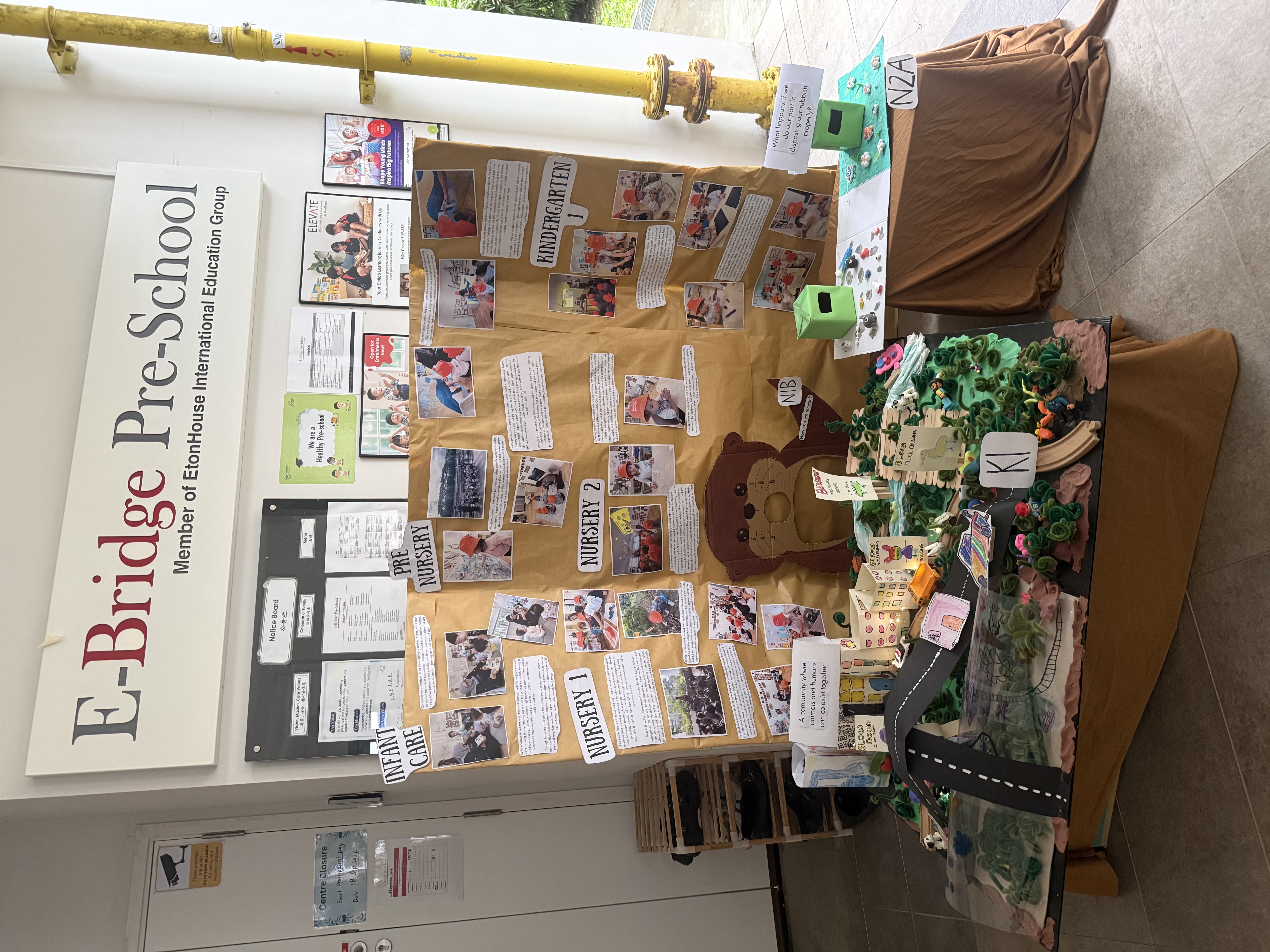
To conclude the inquiry, the children created their own representations of smooth-coated otters and expressed their ideas about how humans and otters can coexist harmoniously. Through this learning journey, they developed a deeper appreciation for wildlife, strengthened their sense of environmental responsibility, and recognised how their everyday actions can contribute to caring for the natural world.
Children’s voices: - “We created the bridge so people can walk on it to see the wild animals like otters.” - “The three arrows sign is to remind people to recycle their things.” - “We can also share this to our parents and friends.” - “We created the bin beside the canal so that people can throw rubbish into the bin.”
The first photo: focuses on having the recyclable bins behind to remind people to throw the trash accordingly & not to feed the otters.
The second photo: focuses on how we should throw our rubbish into the bin
The third photo: The children created otters and the environment using recyclable materials. specifically created the sign to remind people that otters are around.
To conclude their SSDB learning journey, the K2 children extended their inquiry beyond the classroom with a visit to Mandai Zoo, where they had the opportunity to encounter real-life otters in their habitat.
Through a facilitated tour, the children observed the otters closely and connected their prior learning with what they could see firsthand. They discovered more about how otters move, swim, eat and use scent marking to communicate, while noticing how the habitat supports their everyday needs and behaviours.
This meaningful encounter brought together the children’s wonderings, emerging theories and discoveries from throughout their inquiry. By moving from classroom exploration to an authentic experience, the children were able to revisit what they knew, make new connections and deepen their appreciation for otters and the importance of caring for and protecting wildlife and their habitats.
The visit marked a meaningful conclusion to their SSDB journey — from wondering about otters, to investigating their lives, and finally encountering them in the world beyond the classroom. 🌿🦦